 (and after all this time, it is no
longer clear why), it was believed for a while that epilepsy and
schizophrenia were incompatible; it was believed that if a person
had one of those conditions, then he could not have the other one
as well. This in turn led to the belief that epilepsy could
actually cure schizophrenia. And accordingly, Cerletti tried to
find a way of artificially inducing epileptic seizures in people
who had been diagnosed as suffering from schizophrenia.
Electricity seemed to him to be an obvious way of doing this, but
naturally he wanted to find a way in which he could do it without
killing anyone. And then he heard that there were butchers, at a
Rome slaughterhouse, who were giving pigs electric shocks through
their brains- not in order to kill them, but simply in order to
render them unconscious, so that they could be killed before they
regained consciousness. Cerletti found it interesting that the
shocks themselves did not actually kill the pigs; and so, he went
along to the slaughterhouse to observe the proceeding for himself.
And sure enough, he discovered that those proceedings were just
the way that he had heard them described.
(and after all this time, it is no
longer clear why), it was believed for a while that epilepsy and
schizophrenia were incompatible; it was believed that if a person
had one of those conditions, then he could not have the other one
as well. This in turn led to the belief that epilepsy could
actually cure schizophrenia. And accordingly, Cerletti tried to
find a way of artificially inducing epileptic seizures in people
who had been diagnosed as suffering from schizophrenia.
Electricity seemed to him to be an obvious way of doing this, but
naturally he wanted to find a way in which he could do it without
killing anyone. And then he heard that there were butchers, at a
Rome slaughterhouse, who were giving pigs electric shocks through
their brains- not in order to kill them, but simply in order to
render them unconscious, so that they could be killed before they
regained consciousness. Cerletti found it interesting that the
shocks themselves did not actually kill the pigs; and so, he went
along to the slaughterhouse to observe the proceeding for himself.
And sure enough, he discovered that those proceedings were just
the way that he had heard them described.After this, he started to experiment on animals by passing shocks through them- different animals, different parts of the body, different degrees of voltage, and different lengths of time. At the end of all this, he concluded that passing a shock through the brain would be safer than passing a shock through the chest. The next step was to try out this process on a human being, and the opportunity was soon to arise. A man turned up on a train from Milan, without a railway ticket on him, or anything on him that could establish his identity. And he was talking complete gibberish. He was brought to a hospital, where Cerletti proceeded to pass an electric current through his brain. The shock consisted of seventy volts, and it lasted for one fifth of a second. Cerletti then told the assembled staff, who were present on that occasion, that he proposed to repeat the process; whereupon, the man suddenly said, in comprehensible speech: “Don't do that again, you'll kill me!” (Or words to that effect; different accounts, of these events, have given different translations from the Italian language.) Cerletti was somewhat taken aback by this outburst, but he went ahead and gave the man a second shock, nevertheless. This time, the shock was greater in degree, and also greater in duration- it consisted of a hundred and ten volts, and it lasted for half a second. The man had an epileptic fit, and then he fell asleep. Later, when he woke up, he was talking normally, and not talking gibberish. Later on, he was judged to be better, and he was then discharged from hospital.
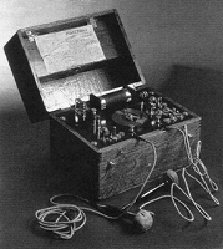
And that, basically, is the story of how electro-convulsion therapy, (or ECT, as it's know for short), came into being. Nowadays, patients are put under an anaesthetic before they receive the treatment. Also, these days, it is used on people who have been diagnosed as suffering from depression, rather than on people who have been diagnosed as suffering from schizophrenia.
So what are the objectives to ECT?
1. Ugo Cerletti himself had grave misgivings about it. Some years, after the first time that he administered it, Cerletti was giving a talk about that occasion. According to someone who was present at the talk, Cerletti recalled how, after receiving the first shock, the patient cried out: “Don't do that again, you'll kill me!” Cerletti than went on: “When I saw the patient's reaction, I thought to myself: this ought to be abolished! And ever since then, I have looked forward to the time when elector-convolution therapy would be replaced by some other treatment”.
2. ECT has often been administered without the patient's consent. Indeed, it happened on that historic first occasion. Cerletti administered the first shock without the patient's consent. And he administered the second shock specifically against the patient's wishes.
3. ECT can be open to abuse. According to a television playwright who was doing research for a medical drama series, some doctors admitted that they sometimes gave patient's ECT as a punishment for being uncooperative. It has also been alleged that nurses at Broadmoor sometimes gave patient's ECT without anaesthetic.
4. No one seems to know exactly how or why ECT works. Indeed, in one sense, strictly speaking, it doesn't work, because it only deals with the symptoms of depression, and not the cause. If the cause remain unresolved, then the patient might become depressed again, which means he might have ECT again… the whole thing would become a vicious circle.
5. In some cases, a patient's improvement could be caused, simply by the power of suggestion. In one hospital, ECT equipment had been used for two years, before it was discovered that it wasn't working, and that the patients weren't getting any shocks at all! (Naturally the patients wouldn't have known that, as they were under anaesthetic at the time.) But some of the patients had got better, nevertheless. This seems to suggest that if patients are told ECT will make them better, and then they have ECT (or think they have it), they could get better, just because they were told they would get better.
6. ECT can have all sorts of harmful side effects. The principal one is memory loss. In one tragic case, a concert violinist, who was suffering from depression, had ECT. Her subsequent memory loss was so bad, that she never played in public again. There have been other harmful effects, up to, and including, death. And some of the survivors have subsequently committed suicide.
All in all, than, it looks as if we might be better off without ECT.
By Robert Dando